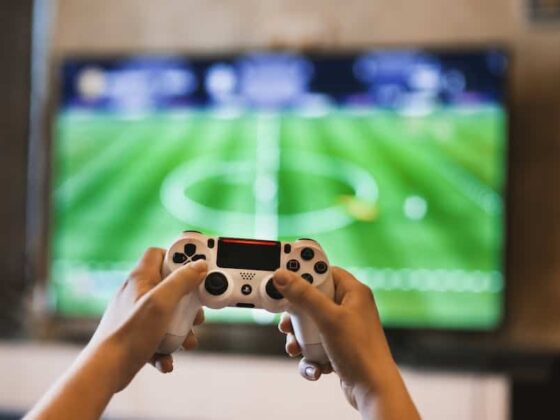

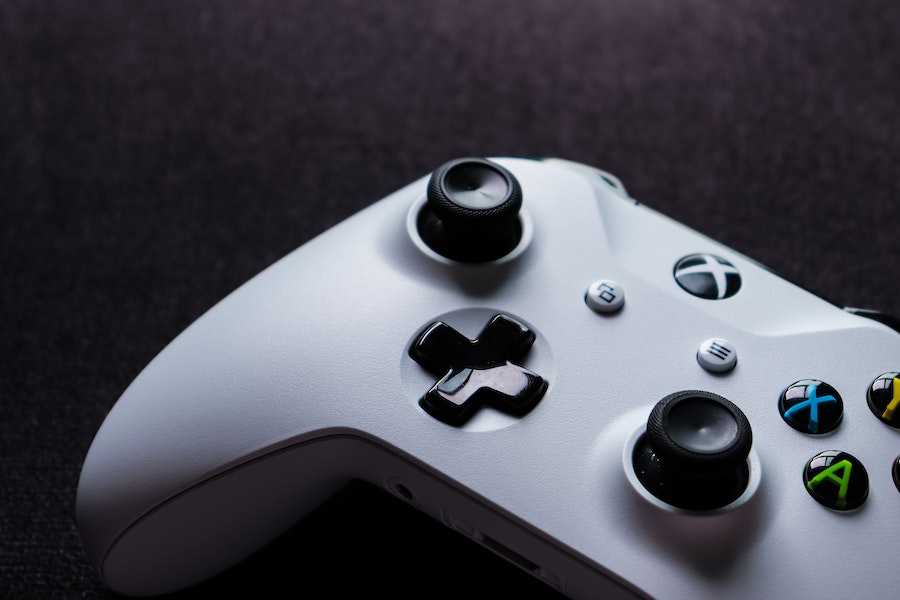
The Xbox 360 and Xbox One both have their own controller. If you’re not playing a game that needs the advanced features of the newer controller, you can use an older controller with your Xbox 360. This is also helpful if your original controller breaks or you simply want to enjoy some older games with a more user-friendly controller. You can also use an Xbox One controller on your 360 to get the benefits of its superior design, without sacrificing any functionality. It’s easy to connect an Xbox One or Xbox 360 controller to the other console, and doing so has a number of useful benefits as well as allowing you to use whichever one you prefer in any given game. Follow these steps to learn how to connect an Xbox One or Xbox 360 Controller to your Xbox 360 console.
Can Xbox One Controller Connect To Xbox 360?
The answer is yes, provided that the device has been properly configured beforehand and that it has been compatible with Windows 10 since its release in 2015/2016 (you can check if it’s compatible here). The reason why we say “yes” is because there are several ways in which this scenario could occur.
How To Connect An Xbox One Controller To An Xbox 360
1. Connect the controller to your PC via a USB cable
2. Open the Xbox 360 console settings menu
3. Choose “Game Controllers”
4. Install the driver
5. Set it as a default controller in any games you want to play with this controller.
6. Enjoy!
Why It’s Easy To Connect Controllers Between Consoles
- The Xbox 360 and Xbox One controllers are created by the same company, Microsoft
- They both share the same basic design
- They both work with Windows 10
- Both use the same buttons and sticks, so it’s easy to map the controls of one to another.
- Their rumble features are exactly the same. This is especially useful when playing games that have rumble functions.
- Both consoles have a similar controller port layout which makes it easy to connect controllers between consoles while keeping them connected at all times without having to disconnect them every time you want to play a different game on each console.
Why You Should Care About Easy Controller Functionality
- You might have different controllers on each console and you might want to keep them all working with the same games.
- You might want to use your Xbox One controller with your Xbox 360 for certain games.
- You might want to use a controller that’s more comfortable for you.
- You might want to use a controller that has specific features, such as rumble functions, that an old one doesn’t have.
- You might want to use a controller that has a specific set of buttons.
- You might want to use a controller that doesn’t work with your console.
- You might want to use a controller that has more buttons than an old one does.
- It’s cheap and easy to buy another one if the first one breaks or stops working.
- It’s easy to keep track of them when you’re playing games with multiple controllers.
- You can save the button layouts for each game so you can easily switch between them in-game without having to re-map everything, again and again, every time you play another game with different controls and it’s much easier to do this when playing on two consoles at once as opposed to trying it on just one console at a time.
Why You Should Buy An Xbox One?
1. price
Price is a great reason to buy an Xbox One. At US$399, it’s much cheaper than the PS4 ($499) and the Wii U ($299). Its price is slightly higher than the Xbox 360 ($349) but you get a lot more for that price.
2. Games
The Xbox One has an enormous library of games. There are more than 500 games in the Xbox One’s library compared to just over 100 on the PS4 and Wii U. The Xbox One’s games are also available for download from its store cheaper than on other consoles, so you’re getting even more value for your dollar when buying games.
3. Live TV
The Xbox One supports both cable TV and Internet TV services such as Hulu, Netflix, Amazon Instant Video and SlingTV, which means that you can watch TV when you want without paying extra fees to pay-TV providers like Dish Network or Comcast. This is particularly useful if you have a cable-TV subscription but don’t use it much since the shows are available online at no extra cost.
4. Kinect 2
Xbox One has Kinect 2 which is an improved version of its predecessor Kinect. With Kinect 2, users can control their console with voice commands and also play some first-party games (Kinect Sports Rivals). It also uses gesture controls so users can interact with their console by drawing shapes with their hands or waving them around in front of the camera in order to control various aspects of the console such as turning it on and off or adjusting volume levels or even moving between menus using hand gestures alone without using any buttons at all! The motion sensor built into Kinect 2 is also capable of detecting the heart rate of the user so that it can be used for fitness purposes.
5. Features
The Xbox One has many features such as the ability to watch TV while you’re playing games, a built-in media player, and the ability to record gameplay footage directly to an external hard drive. This means that users can have their own videos uploaded on YouTube in no time at all!
6. Exclusive titles
Xbox One has exclusive titles like Halo: The Master Chief Collection which is a collection of Halo games from past generations and Rise Of The Tomb Raider which is an exclusive title for Xbox One only which was developed by Crystal Dynamics (the studio behind Tomb Raider) exclusively for Xbox One (so far). Also, Microsoft has announced that they will be bringing backward compatibility with Xbox 360 games to the Xbox One so that users can play their old game discs on their console without having to buy them again. This means that if you’re upgrading from an older generation console like PS3 or Wii U then you’ll be able to play your old disc collection on your new console without having to spend money on them again!
Conclusion
Both Xbox consoles have their own unique controllers, and you can use whichever one you prefer with whichever console you prefer. The only difference between the controllers is the design, so you can use whichever one you like the most. It’s easy to connect an Xbox controller to the other console, and doing so has a number of useful benefits as well as allowing you to use whichever one you prefer in any given game.
FAQs:
- What is the difference between Xbox One and Xbox 360?
- The Xbox One has a different controller, so you can use whatever one you prefer with whichever console you prefer. However, all games are backward compatible so you can play your old game discs on your new console without having to buy them again.
- What is the difference between Kinect 1 and Kinect 2?
- The Kinect 2 is capable of detecting the heart rate of the user so that it can be used for fitness purposes, whereas the original Kinect was only capable of detecting voice commands and voice recognition (so far). Also, in addition to this, the older Kinect had only one microphone built into it instead of two while the newer version has two microphones built into it to enable spatial sound as well as voice recognition capabilities.
- What is the difference between Xbox One and Xbox 360?
- The Xbox One has a different controller, so you can use whatever one you prefer with whichever console you prefer. However, all games are backward compatible so you can play your old game discs on your new console without having to buy them again.
- What is the difference between Kinect 1 and Kinect 2?
- The Kinect 2 is capable of detecting the heart rate of the user so that it can be used for fitness purposes, whereas the original Kinect was only capable of detecting voice commands and voice recognition (so far). Also, in addition to this, the older Kinect had only one microphone built into it instead of two while the newer version has two microphones built into it to enable spatial sound as well as voice recognition capabilities.